
THE PSYCHOLOGY OF A HAT: WHY WHAT YOU PUT ON YOUR HEAD SAYS EVERYTHING?
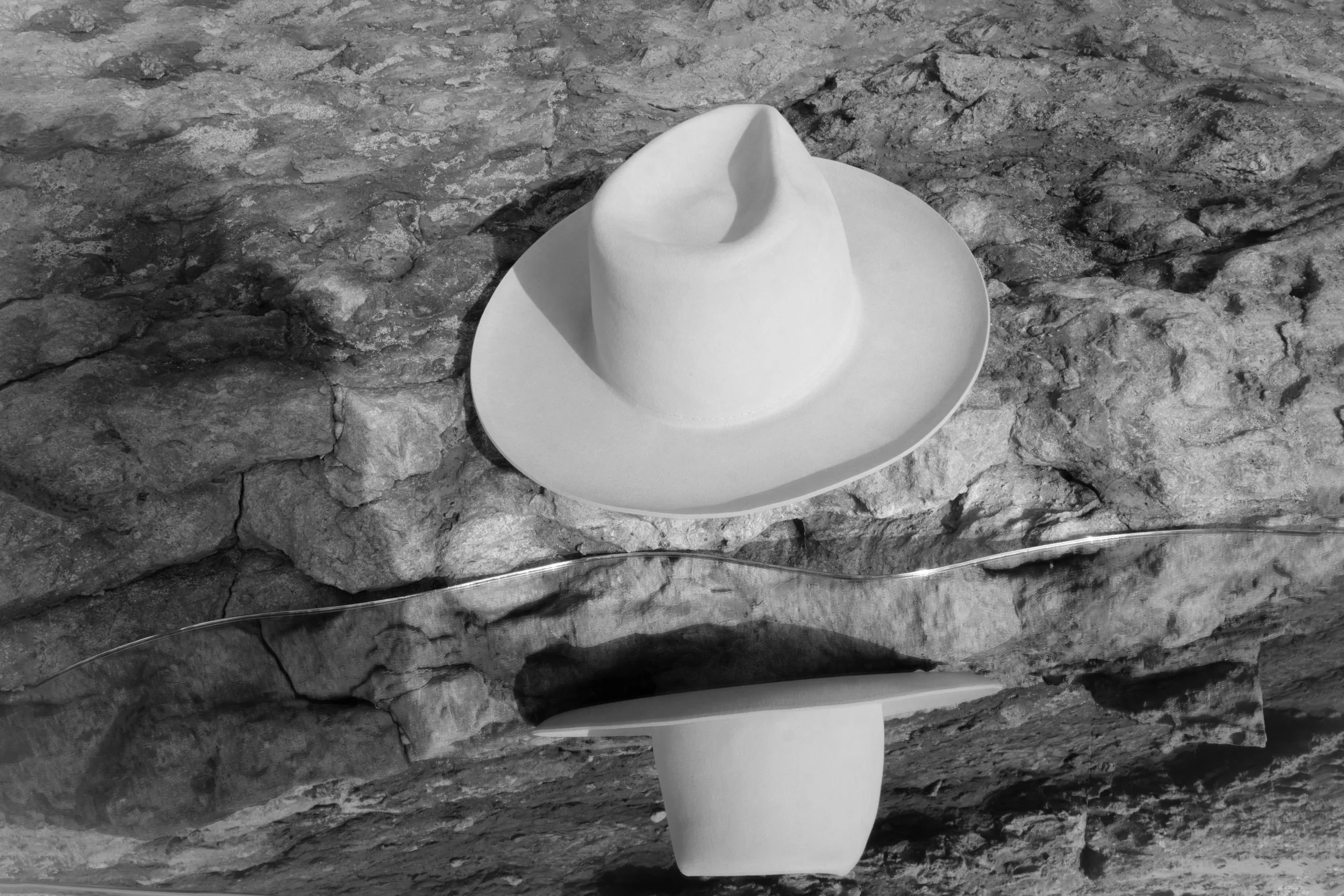
What psychologists call enclothed cognition — the documented effect of clothing on the wearer's behaviour and self-perception
A HAT HAS NEVER BEEN ABOUT COVERING THE HEAD
Long before fashion existed as an industry — before runways, before trends, before the concept of a "look" — humans were putting things on their heads on purpose.The oldest known hat dates to around 3,300 BC, found on Ötzi the Iceman, preserved in the Alps: a simple bearskin cap. Functional, yes. But even then, headwear was doing more than blocking cold. It was marking status, signalling tribe, communicating something wordless about the person wearing it.In ancient Egypt, elaborate headdresses separated pharaohs from the rest of the world — not just symbolically, but literally. Height meant power. The higher the crown, the further from the ordinary.In medieval Europe, sumptuary laws — actual legislation — controlled who could wear what kind of hat. The shape of a brim, the material of a crown, the height of a felt: these were regulated because they meant something. A hat was social code made visible.By the 19th century, going hatless in public was equivalent to going undressed. Not wearing one wasn't neutral — it was a statement, and usually a transgressive one.THEN SOMETHING SHIFTED
The 20th century dismantled hat culture almost entirely. As the world accelerated — cars, open-plan offices, the slow collapse of formality — the rituals that once gave objects meaning were the first things dropped. The hat, which had spent millennia encoding who a person was, became inconvenient. And inconvenient, for a time, became invisible.But it never disappeared. It retreated to the people who still understood what it was for.Jazz musicians wore fedoras like armour. Cowboys carried their whole identity in a brim. The counterculture of the 60s and 70s picked up wide hats and berets as symbols of refusal. Hip-hop built visual languages out of caps and bucket hats. Each subculture rediscovered the same thing: that putting something deliberate on your head changes the way you move through the world.
THE PSYCHOLOGY BEHIND IS REAL
What psychologists call enclothed cognition — the documented effect of clothing on the wearer's behaviour and self-perception — applies especially to hats. Unlike a shirt or a pair of trousers, a hat sits at the apex of the body. It's the first thing people see. It shapes the silhouette from the top down.Research shows that people who dress with intention report higher confidence, greater clarity of identity, and a stronger sense of personal presence. A hat, worn consciously, does something even a well-chosen outfit can't fully replicate: it frames the face, changes the posture, and signals — before a word is spoken — that this person made a choice about who they are today.For some, that's confidence. For others, mystery. For others still, it's ritual — the last thing before the door, the piece that makes everything else feel decided.Clothing dresses the body. A hat says something quieter: who you are, or perhaps, who you are becoming.WHY WE MAKE HATS
We started making hats because we believe that what you choose to put on your body — especially at its highest point — should be chosen with care.There is a kind of making that exists outside of trend cycles. It moves at the pace of hands, not machines. It asks: will this still be true in ten years? Will this hold? Will someone reach for this on the days that matter?We're not interested in making something you wear once. We're interested in the hat that becomes part of how people know you — that travels with you, ages with you, holds the shape of the life you've lived in it.Because the right hat doesn't complete a look. It completes a stance.
There's a reason people remember hats across centuries of history — and still remember them today, on the right person, in the right room. They sit at the highest point of the body, closest to the mind.Maybe that's not a coincidence.©THE HALO LAB